Build a Marketplace Without Ad Budget: Vanboerse Story

AI summary
- Malte Gruner took five years living off a working student job to build Vanboerse, a campervan marketplace, without paid advertising.
- He acquired sellers through two and a half years of daily cold outreach in forums and buyers via a Facebook group with 160,000 members using Zapier automation for 20 euros monthly.
- Vanboerse monetized after year one and a half through 12.99 euro listing upgrades, generating initial revenue of 500 to 600 euros monthly before testing Meta ads.
- Malte is migrating from Bubble due to four-figure monthly workflow costs and user limits, planning a React rebuild with expert developers to handle payments and personal data securely.
Generated with AI, the details are in the article.
Table of contents
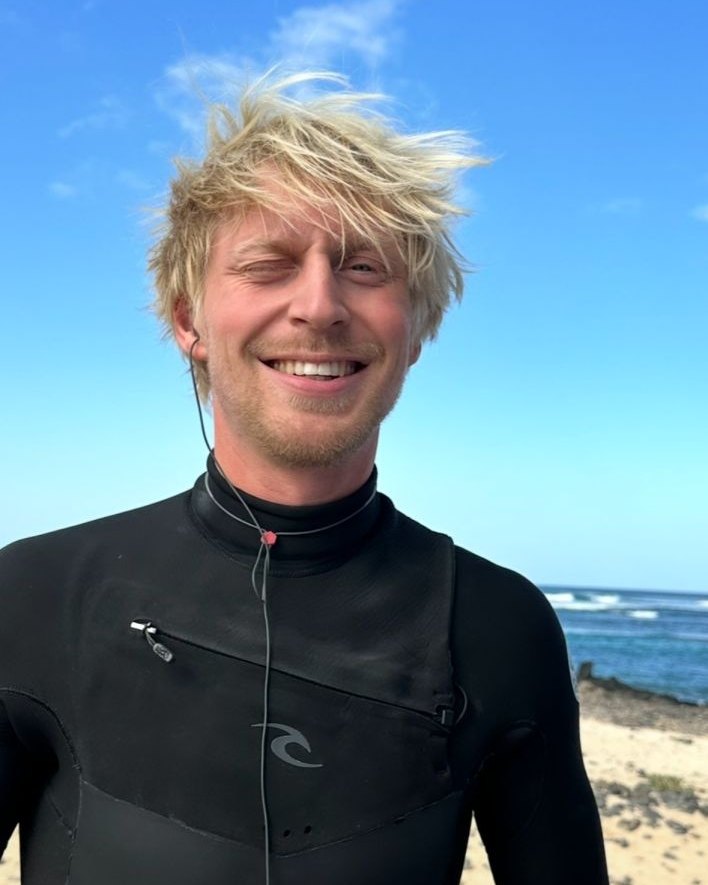
I came across Malte Gruner on LinkedIn. He wrote openly that it took him five years until he could live off his marketplace. You rarely hear that. Most founders talk about two years, three at most. I wanted to know how you stay with something for that long, and above all how you build a two-sided marketplace when there is no money for ads. Malte founded Vanboerse, a marketplace for campervans and motorhomes. His answers were more concrete than I expected.
Watch the video:

From Personal Pain to Marketplace
Malte lived in a van full time with his girlfriend for three years. When the two went looking for a bigger camper, Kleinanzeigen (the German classifieds platform) quickly got on their nerves.
"You had no proper filters. There are also a lot of crooks on Kleinanzeigen. And then you drive there, and the vehicle was nothing like the description."
Twice they drove a long way and stood in front of a vehicle that had little to do with the listing. That is where the idea came from: there are enough vehicles out there, and enough people looking for them. Both sides exist, only the right marketplace was missing.
I like this starting point because it is so unspectacular. Malte did not launch a market research project. He had the problem himself and solved it. The van fits the picture: an old Mercedes MB100 with a high roof, kitchen, shower and toilet, in which the two lived for three years and, in his words, never lacked anything. Malte studied mechanical engineering and holds a bachelor's degree. He learned the conversion from YouTube tutorials.
Five Years, on the Side, With a Working Student Job
I wanted to know how Malte financed that time. His answer was clear:
"I always studied on the side. I had a working student job the whole time, which is what I simply lived on."
His parents gave him the first plan for the tool he used to build the marketplace as a Christmas present, around 500 euros a year. Malte had a year to build the whole thing and did it in one month. He built with Bubble, a no-code tool he compares to Shopify for software.
Why did he stick with it for so long? Because traction showed up early. User accounts signed up, people listed vehicles even though the product was far from perfect. He earned nothing at first, quite the opposite, costs piled up, for example the tax advisor. But the signal was clear: other people feel the Kleinanzeigen problem too.
Then came a sentence I wrote down:
"Earning 1,000 euros a month on the internet is a huge success. Even 500 euros with your own product is a huge success."
Malte gets annoyed by posts showing how to reach 10,000 euros a month in two months. Without tricks or perfect timing he considers that unrealistic. Today he lives off Vanboerse.
Brand Radar: where does your brand stand?
Brand and generic traffic, competitors and potential at a glance, free of charge.
Marketing Without Paid: Winning Both Sides Organically
When Malte says "no marketing", he always means paid marketing. He did marketing the whole time. And he says himself that building a marketplace may be the hardest thing you can do.
Supply Side: Cold Outreach Every Morning
On the supply side he went to forums and platforms and wrote to sellers directly, asking whether they wanted to list their van with him. Every morning for a year, after that his girlfriend took over, always paced so that nobody got banned for spam.
"We wrote to people every single morning for a good two and a half years. Not one day off."
Today it runs on its own. The vans come without outreach.
Demand Side: The Facebook Group From Day One
Malte brought in buyers through a Facebook group he built from the start. He now runs three groups, the largest with around 160,000 members according to Malte. He posted every new listing into the group automatically via Zapier.
"Apart from the Zapier subscription for 20 euros a month, I had 160,000 people in the group, theoretically."
Many still underestimate Facebook. For Malte, the group delivered buyer traffic while the marketplace was still small.
Instagram, YouTube and SEO
On Instagram he used the same principle: prepare the vehicle photos, add a short description, link in bio. After one or two years the YouTube channel followed. In parallel he did SEO, as he says as a non-expert but with the basics. He built an FAQ section and filled it with the most searched questions from Search Console, including ones that only half fit a marketplace, such as finding a cheap camper under 10,000 euros. Blog articles followed. They are offline now, and Malte is rebuilding them.
I appreciate the honesty here. Malte says himself that such simple tricks probably no longer work the same way today. The core idea stays: if you want to be found, answer the questions your audience asks.
Monetization: Grow First, Earn Later
Malte postponed monetization for a long time. A marketplace lives from both sides, and if you open the money tap on one side and it breaks away, the other falls with it. About a year and a half ago the time came. Sellers can upgrade their listing for 12.99 euros, with more pictures and a better designed title. At first this brought in 500 to 600 euros a month. Too little to live on, too much to leave lying around.
With that money he tested small Meta ads for the first time. His stance is clear, and he stresses himself that it applies only to his marketplace:
"If you put out content for zero euros, everyone comes voluntarily. With Meta ads it gets put in front of their nose, and then they maybe click on it."
I see it similarly, from an intent perspective. Someone searching on Google wants something. Someone who sees an ad on Instagram is not actively searching yet, which leads to fewer buyers and more drop-offs. Malte knows people for whom Meta ads and Google ads work very well, and there are good reasons for brand campaigns. But if you start from zero like most people and have to finance your life on the side, you should in his view not put most of your money into Meta.
YouTube With a Half-Charged iPhone
On YouTube, Malte says, he sees the biggest potential of all his organic channels. The campervan community there is huge. Some of his videos have more than 100,000 views.
His setup is deliberately simple. At the trade fair in Düsseldorf he stood there with his girlfriend's iPhone, its battery half full, and good microphones. Other channels showed up with big cameras and three people.
"They filmed the same vehicle and got maybe a fifth of the views I did."
The workflow behind it:
- Room tours, spontaneous and free: he asks the owners whether they will show their van and talks to them for ten minutes beforehand. Then it runs like a conversation, just with a camera.
- A video with 20 minutes of raw footage takes him about one hour to cut in CapCut, mostly by doubling the speed.
- Thumbnail, title and description add about another hour, with ChatGPT writing the texts.
Why does it work? Malte is his own target audience. When he wants to watch a campervan video, he wants to see the van and not sit through a one-minute intro. Polished productions that were new a few years ago feel worn out today. In the conversation I told how a Tenerife video made me realize that the honest trip gave me more than the polished advertising. On top of that: if you notice that a post was written with ChatGPT for the tenth time, you stop reading it.
The problem is time. According to Malte, maybe a fifth of his working time goes into YouTube. Ideas like build videos or a format where he buys a van with a customer are on the list until more people join the team.
Leaving Bubble: Costs, Migration and AI Security
Here the conversation got technical. Bubble bills by workflows: every page visit and every click that triggers something costs money. For Malte this is partly in the four-figure range per month. He is hitting limits with the number of users logged in at the same time and wants to put the marketplace on its own feet, also because he wants to expand it.
His migration works like this: he describes every button and every effect and lets ChatGPT turn that into a migration document. That is done. The rebuild is supposed to be handled by someone who really knows the field. React is planned as the stack, the database is still open.
Why not do it himself with AI? I found Malte's answer honest:
"As soon as payments are involved, as soon as you hold personal data, it gets dangerous. I am pretty sure that 90 percent of the Lovable sites built by non-hackers have security holes."
He saw first-hand how, in an acquaintance's app, all the data could theoretically be pulled out. That is his personal estimate and not a study. The point stands anyway. I gave him a few tips on this:
- Railway for hosting, with EU servers, which matters for GDPR. You can connect it with Claude Code and VS Code.
- Claude Code for code and infrastructure, Codex as a second check and for design.
As a timeline, Malte names March. Winter is the quietest time in the camper business, from March people hit the road, look at campers, and the first ones want to sell. By then the new system should be running. There is no test environment yet. I offered to talk again once the relaunch is live.
Building a Team and a Brand With People
Malte is looking for people for the product. In the conversation he also said he wants someone for product marketing covering paid, SEO and GEO. He himself wants to focus on growth and brand building. Anyone who feels addressed can best reach him on LinkedIn. He also says, though, that he already has good people on board if everything works out.
I found it striking how he talks about his face. Malte actually does not want to be the face of the brand. The Vanboerse Instagram account only posts vehicles, and in the YouTube videos you rarely see him. Still, he hears more and more often that this is exactly what he is. His explanation:
"You need real people behind a product. If people know there is only AI behind it, nobody is interested."
For a marketplace, trust is decisive. At eBay, an AI assistant answers when fraud happens. At Vanboerse there is a person behind it. Malte sees the moat in the data, the brand and the content. You could rebuild the marketplace in two nights, he says, but nobody can buy those three things. You can buy clicks, but they are not your own clicks. Turn off the money tap and the traffic is gone the next day.
I gave him one more thought: forums. He had told me that he reads the forum for his Mercedes MB100 every day, a site that looks carved in stone, with hundreds of users a day. Answers about this vehicle exist only there, and AI does not go that deep. Malte had not yet considered a forum on Vanboerse. He liked the idea.
My Personal Key Takeaways
- Your own pain is a good starting point. Malte experienced the Kleinanzeigen problem himself, so he knew what was missing.
- Start on the side. A working student job and studies bought him five years of time without pressure.
- Tackle both sides of a marketplace separately. Sellers through cold outreach, buyers through a Facebook group.
- Simple automation is enough. Zapier for around 20 euros a month brought listings into the group.
- Monetize when both sides stand. Turning the money tap too early can tip the whole balance.
- Paid depends on the business model. For Malte's marketplace he is skeptical about Meta ads, for other products it can pay off.
- Authentic content beats production effort. A half-charged iPhone, a conversation and real vans worked better for Malte than polish.
- AI-built apps need security knowledge. Once payments and personal data are involved, people with experience belong on the team.
- Two to three years is normal. If you doubt yourself after the first month, you are in the average.
Conclusion
Malte showed me how much manual work sits behind an organically grown marketplace: messages to sellers every morning, a Facebook group from day one, videos shot on a phone, SEO basics. None of it is a trick, all of it is persistence. His closing words to anyone who wants to found something stayed with me: if you stick with something you enjoy for long enough, it can only work out, as long as you stay flexible when something does not work.
If you are building a marketplace, a portal or another product with two sides and want to know how to become visible organically, listen to the episode. And if you are looking for support with SEO and GEO, get in touch.
More about Malte's marketplace: vanboerse.de and his YouTube channel.
FAQ
How did Vanboerse win sellers and buyers without an ad budget? On the supply side, Malte wrote to sellers in forums directly, every morning for a year, after which his girlfriend took over. On the demand side he built a Facebook group from day one, into which every new listing was posted automatically via Zapier. Instagram, YouTube and SEO basics came on top.
How long did it take Malte to live off Vanboerse? Around five years. He built the project on the side while studying and working as a working student. Monetization through listing upgrades for 12.99 euros started about a year and a half ago, at first with 500 to 600 euros a month.
Why is Malte skeptical about Meta ads for his marketplace? His observation: people who arrive through free content come voluntarily and fit the offer. With Meta ads, the ad is shown to people who are not actively searching. Malte stresses that this applies to his marketplace, and that paid can work very well for other products.
Why is Malte moving away from Bubble? Bubble bills by workflows, and for Malte the costs are partly in the four-figure range per month. He is hitting limits with user numbers and wants to expand the marketplace. He created the migration document with ChatGPT, and an expert is supposed to handle the rebuild. React is planned as the stack.
How secure are apps built with AI? Malte estimates that 90 percent of the Lovable sites built by non-developers have security holes. That is his personal assessment. Once payments and personal data are involved, he recommends people with software knowledge. I additionally recommended hosting with EU servers, such as Railway, because of GDPR.
Listen to the episode: Build a Marketplace Without Ad Budget: The Vanboerse Story with Malte Gruner
Free initial consultation
30 minutes, your website, concrete next steps. No sales pressure.

About the Author: Antonio Blago
SEO Freelancer & AI Visibility Expert
I optimize SEO data-driven with Python, behavioral psychology, and my Neuro-SEO System®. On YouTube, LinkedIn, and Instagram I share hands-on tutorials, insights, and SEO strategies.