Interesting Facts About SEO: Search Engine Optimization – Basics, Definition, and Value

AI summary
- SEO is not an isolated marketing channel but part of the marketing strategy: customers move across several touchpoints, and organic search is often the invisible first contact.
- Google receives 80 to 90 billion searches monthly worldwide, making SEO a highly plannable marketing channel with measurable search volume and market potential.
- Position one in Google search results achieves an average click-through rate of 5.59 percent, while position ten only reaches 0.52 percent.
- SEO typically shows first measurable results after three to six months, with strongest gains often arriving in the second half of the first year.
- Unlike paid ads that stop working immediately after budget ends, SEO results compound with content continuing to deliver traffic month after month without additional spending.
Generated with AI, the details are in the article.
Table of contents
SEO is one of the most exciting marketing channels there is, at least for me. In this article we will look at the basics, the definition, and the value of SEO. We will also examine how search engines such as Google work and why SEO is relevant for your marketing. On top of that, I will give you practical tips for optimizing your website and answer the question of how long it takes until you see results from your SEO investment.
What Is SEO and How Does Google Work?
Definition of SEO
SEO, or search engine optimization, is the process of optimizing your website to improve its visibility in the organic search results of engines like Google. With targeted SEO measures you improve your rankings and generate more organic traffic.
The basics of search engine optimization
SEO means optimizing your website so that search engines can understand and index it better. One essential foundation is choosing the right keywords for your content. Just as important: create high-quality content that matches the search intent of your users. You can read more about the fundamentals in my guide on acquiring new customers through SEO.
How does Google work?
Google uses complex algorithms to index websites and deliver relevant results for every query. It weighs factors such as content quality, site structure, and the number and quality of backlinks. The better your website is optimized for these criteria, the higher it appears in the search results.
Why Should I Use SEO as a Marketing Channel?
SEO improves your visibility on Google and serves an existing, natural demand (pull marketing). Google is used 80 to 90 billion times per month worldwide, which makes it the search engine with by far the highest usage rate.
Every day, people use Google to search for products and services
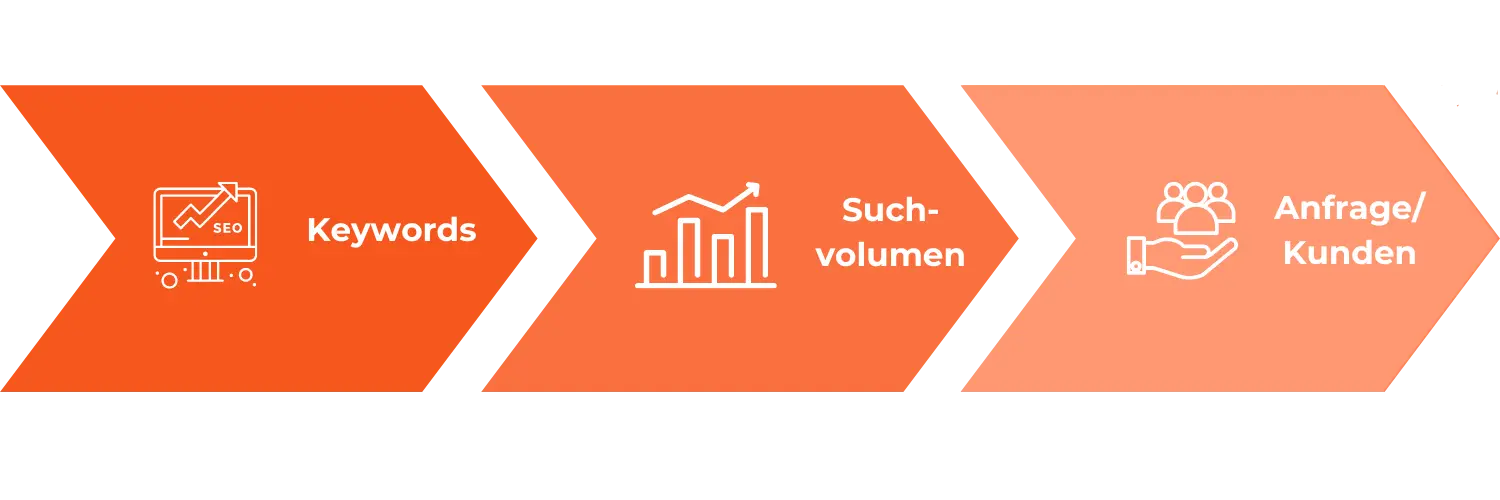
People search with keywords. The more people use similar keywords, the higher the search volume. That volume is measurable, and that is exactly what makes SEO plannable as a channel.
Search volume reveals market potential
Keywords, search volume, inquiries and sales: that is the chain behind every successful SEO strategy. Want to know what it looks like for your domain? With the free Online Presence Dashboard we can determine your SEO potential, free and without obligation.
Brand Radar: where does your brand stand?
Brand and generic traffic, competitors and potential at a glance, free of charge.
SEO Is Not an Isolated Marketing Channel
The question "Why should I use SEO as a marketing channel?" falls short. It follows a channel mindset that has been outdated for years: SEO here, social there, paid and email next to it, each with its own budget and its own report.
SEO is not an isolated marketing channel. SEO is part of your marketing strategy. The by-product is that you get found organically on Google, in AI search and in other search systems.
Customers do not think in channels
Your customers do not think in "SEO", "social", "paid" or "email". They have a problem, a need or a goal, and they move across several touchpoints on the way: they google a question, read a blog article, see a post on LinkedIn or Instagram later, compare providers in ChatGPT and come back weeks later by searching for your brand.
I see this constantly in practice: for companies that grew organically, the first contact with the brand is usually a blog article or a guide page. Later the customer says "I know you from Instagram", although the search happened months earlier. SEO is often the invisible first touchpoint.
The right question to ask of SEO
So SEO should not answer the question "How do we get more organic traffic?"
It should answer this one: How do we create demand, trust and visibility along the entire customer journey, and make sure we are found exactly when the customer needs us?
This question changes the work. Content is no longer planned per keyword but per stage of the customer journey. And content alone does not perform if the journey behind it is broken. Clicks are not contacts or revenue. Someone arriving from search needs a clear next step on the page, one obvious way to get in touch, and the same message they will meet again in social media or in an ad.
- Awareness: The customer understands the problem and asks questions ("how", "why", "what is"). SEO delivers guides, glossary entries and studies that answer the question before any provider is in the picture.
- Consideration: The customer compares solutions and checks providers. SEO delivers comparisons, service pages, cases and reviews, with the same message as social and ads.
- Decision: The customer searches for price, brand, location or product. SEO delivers brand visibility, local search, product and offer pages and one clear way to get in touch.
- Retention: The customer looks for instructions, support, accessories or upgrades. SEO delivers help content and FAQs that keep existing customers and trigger referrals.
What this means for measurement
Most attribution models are linear: ad clicked, purchase made, done. Whatever happened before is not valued. In SEO, however, people often research for months and the conversion finally runs through another channel. So measure the organic share of all touchpoints instead of the last click only: how often the blog was read, how often the brand was typed in directly after an organic search, which pages show up in journeys that convert later. That is also the basis on which management can decide on an SEO budget, even though not every euro is directly attributable.
Why Is Digital Visibility Important for Me?
Customer acquisition and marketing have fundamentally changed. Budgets that used to go into radio and TV now flow into digital channels, and no B2B or B2C company can afford to ignore search engine optimization. Many customers search Google first before they buy anything. Wouldn't it be great to be found directly by potential customers? The competition is not sleeping, and it is likely that a competitor in your industry is already following this strategy. Hardly anyone voluntarily clicks to page two of Google.
The value of a Google position
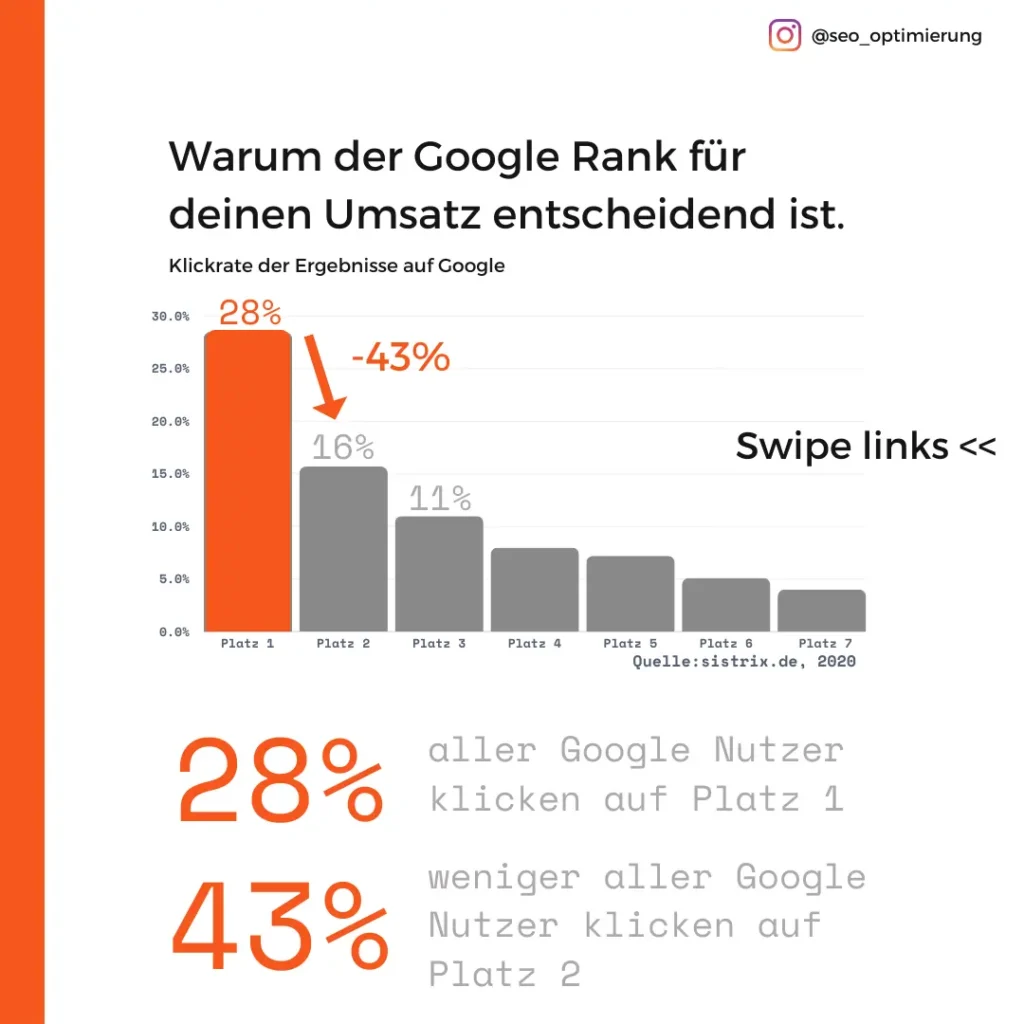
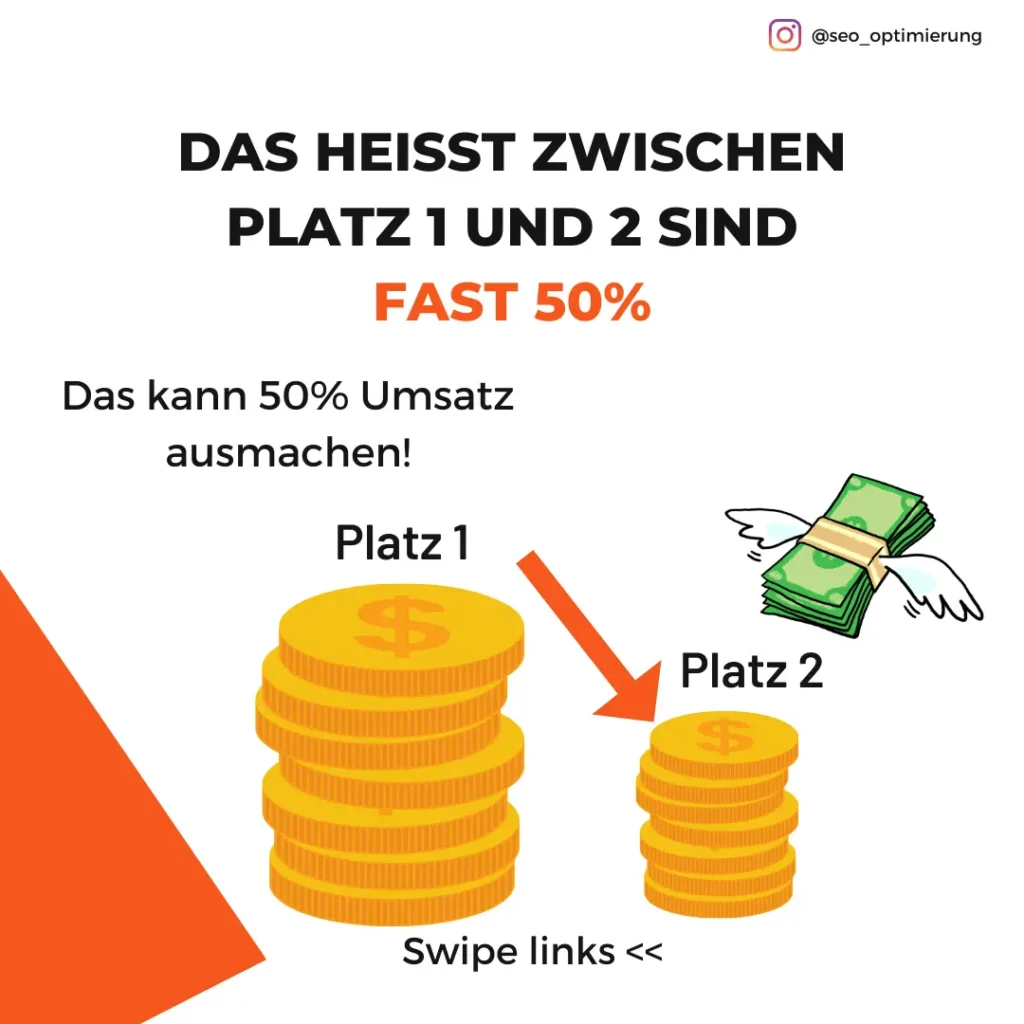
The slides below show why a better Google position can mean 50 percent more revenue. The click-through rates behind this come from the empirical Keyword Study 2026: position 1 earns an average CTR of 5.59 percent, position 10 only 0.52 percent.
SEO as relevance for search engines
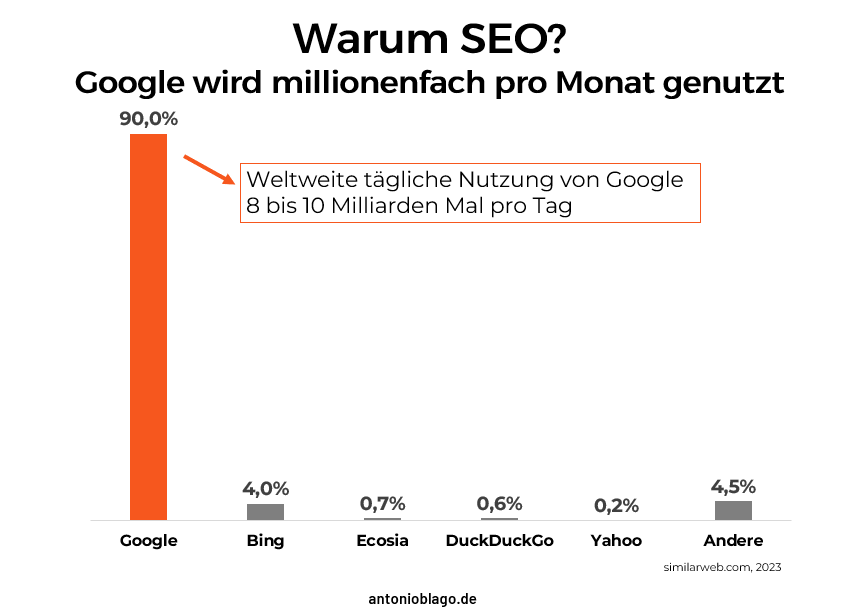
Search engines are usually the first stop when people look for information or products. In Germany, Google has roughly 90 percent market share and is used millions of times every day. If you optimize your website, you make it easier for search engines to find, index, and prominently place your pages. That optimization covers site structure, relevant keywords, loading times, and content that works for users and search engines alike.
Optimizing for mobile search results
More and more people browse on mobile devices. Google takes mobile usability into account when ranking pages, so a mobile-optimized website can directly improve your placement in mobile search results.
How Do You Optimize a Website for Search Engines?
On-page optimization
On-page optimization covers all measures on your own website: carefully selected keywords in texts and meta information, clean headings, and content that answers the search intent. Together with off-page optimization and technical SEO, it forms the core of every SEO strategy.
SEO tips for URL structure
Keep URLs short, readable, and keyword-focused. Avoid session IDs, unnecessary parameters, and duplicated title fragments. A clean URL structure helps users and crawlers understand your page before they even open it.
The value of paid search (SEA/Ads)
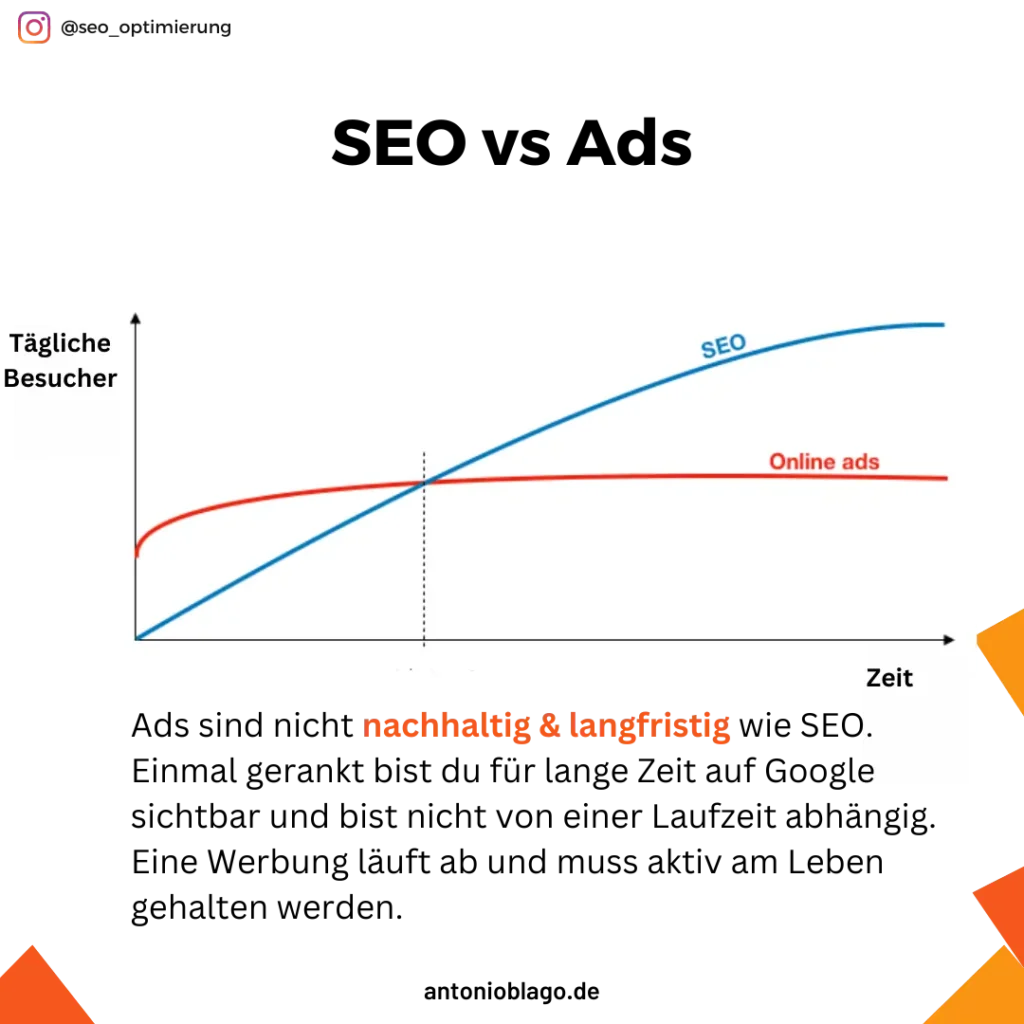
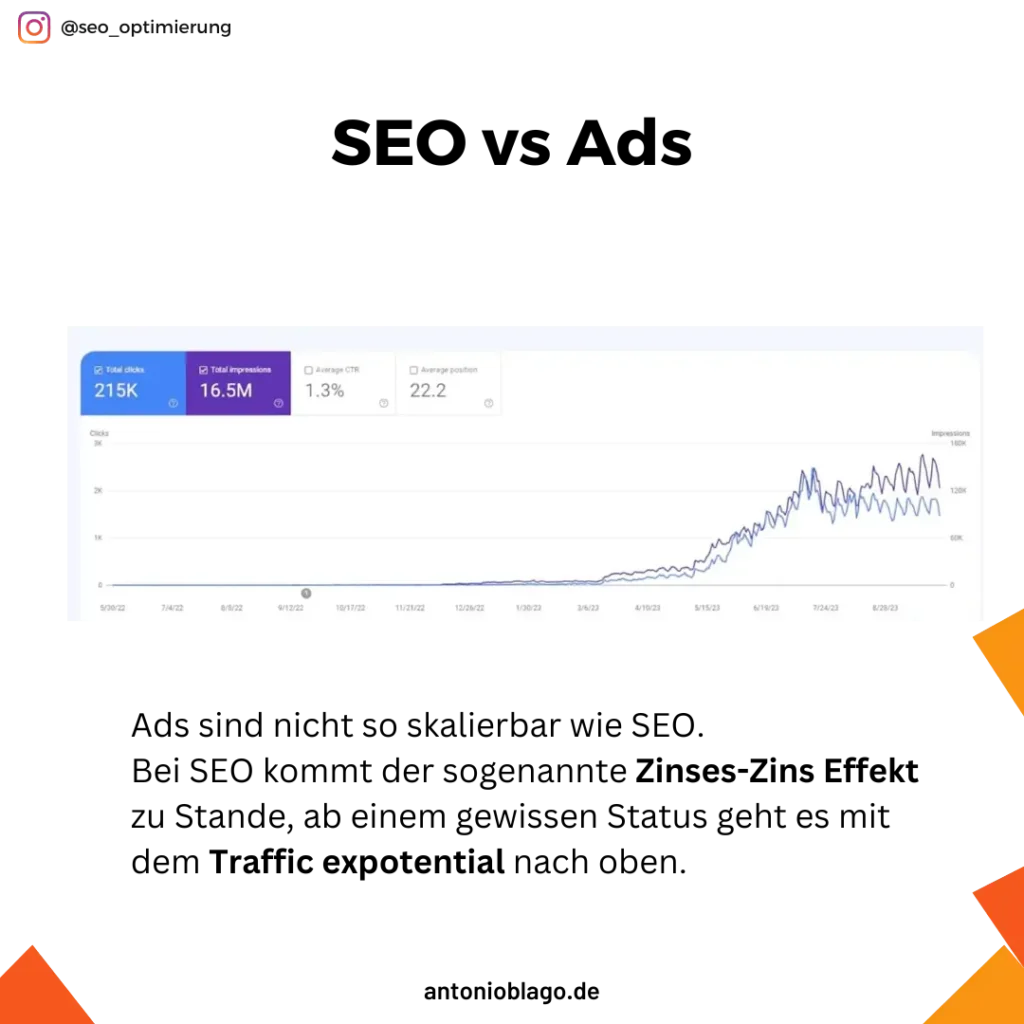
Paid search delivers visibility instantly, which makes it a useful complement while your organic rankings grow. The difference: ads stop working the moment you stop paying, while SEO keeps compounding.
SEO vs. Ads
The slides show the comparison in detail, including why the combination of both channels usually wins.

How Long Does It Take to See SEO Results?
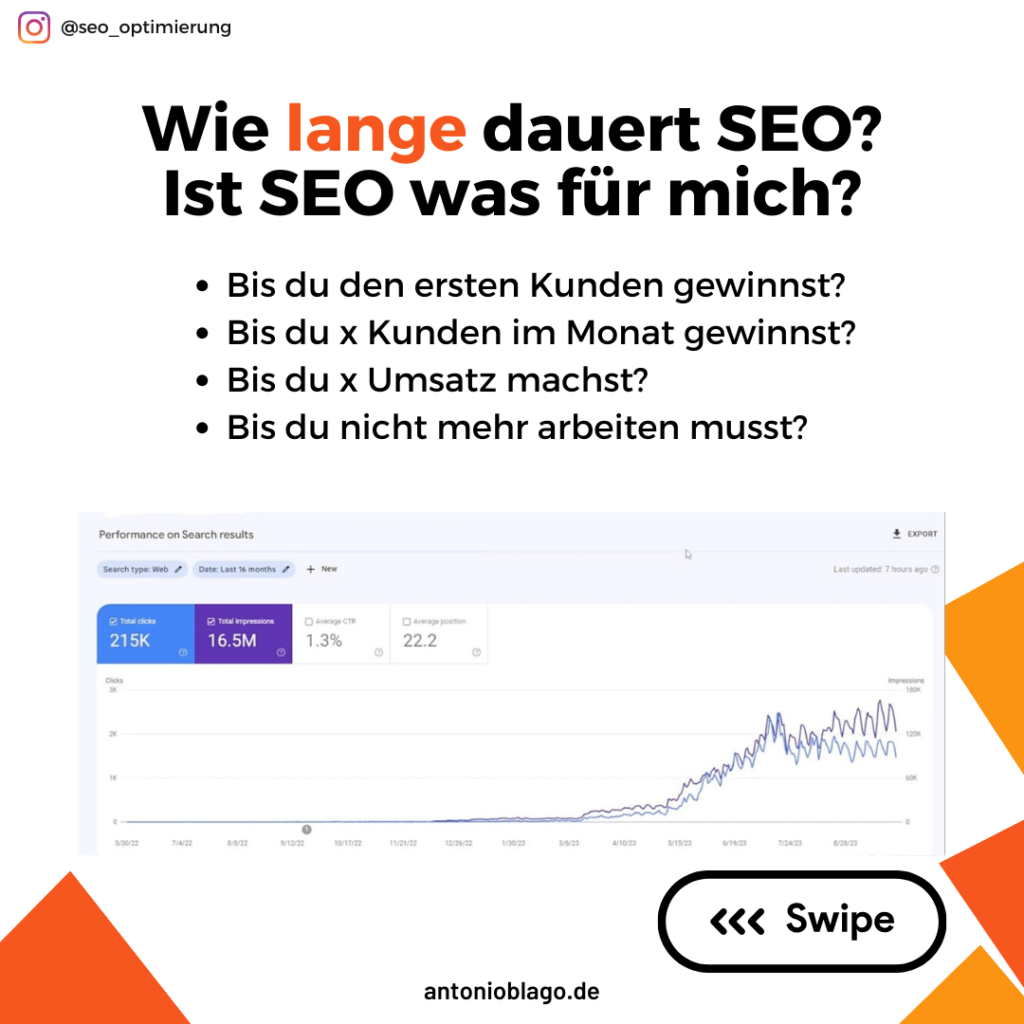
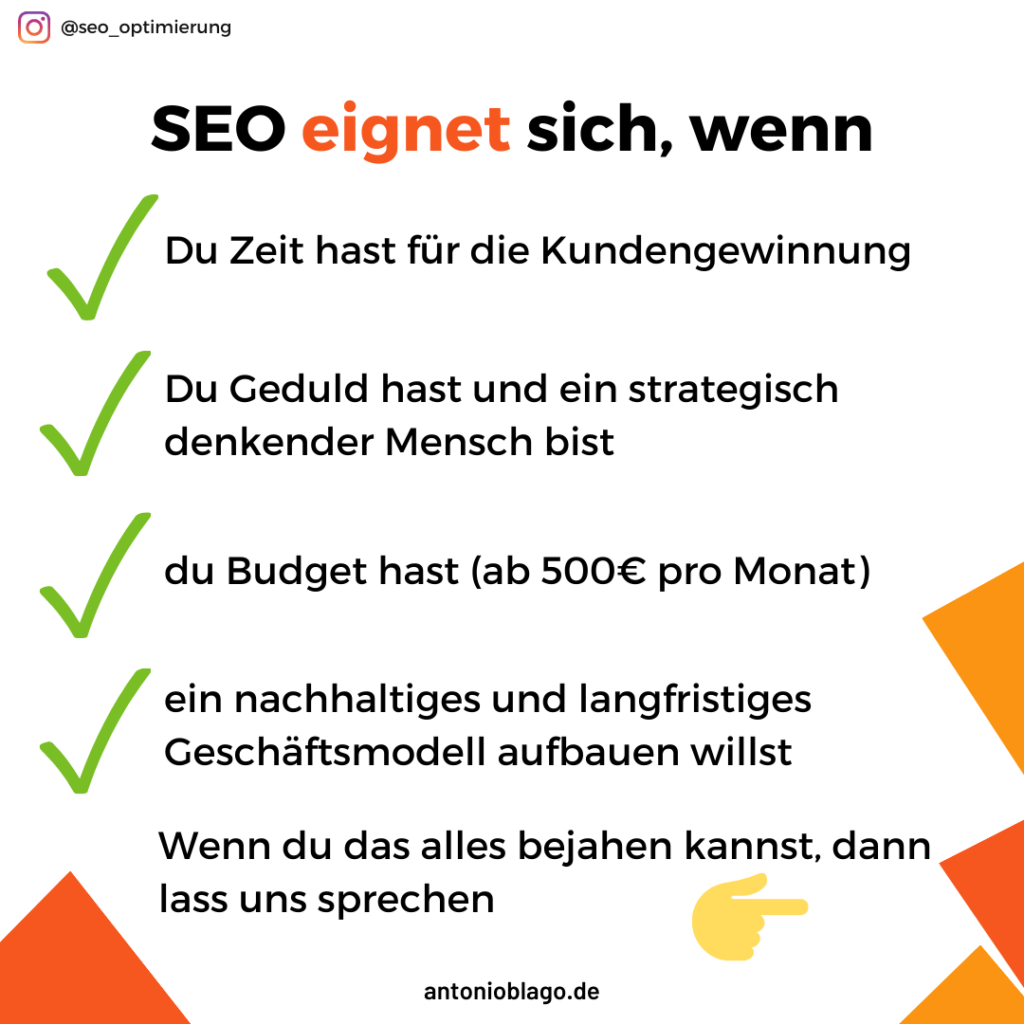
SEO is a long-term investment. As a rule of thumb, expect the first measurable effects after three to six months, with the strongest gains often arriving in the second half of the first year. The slides walk you through a realistic timeline.
Factors that influence how long SEO takes
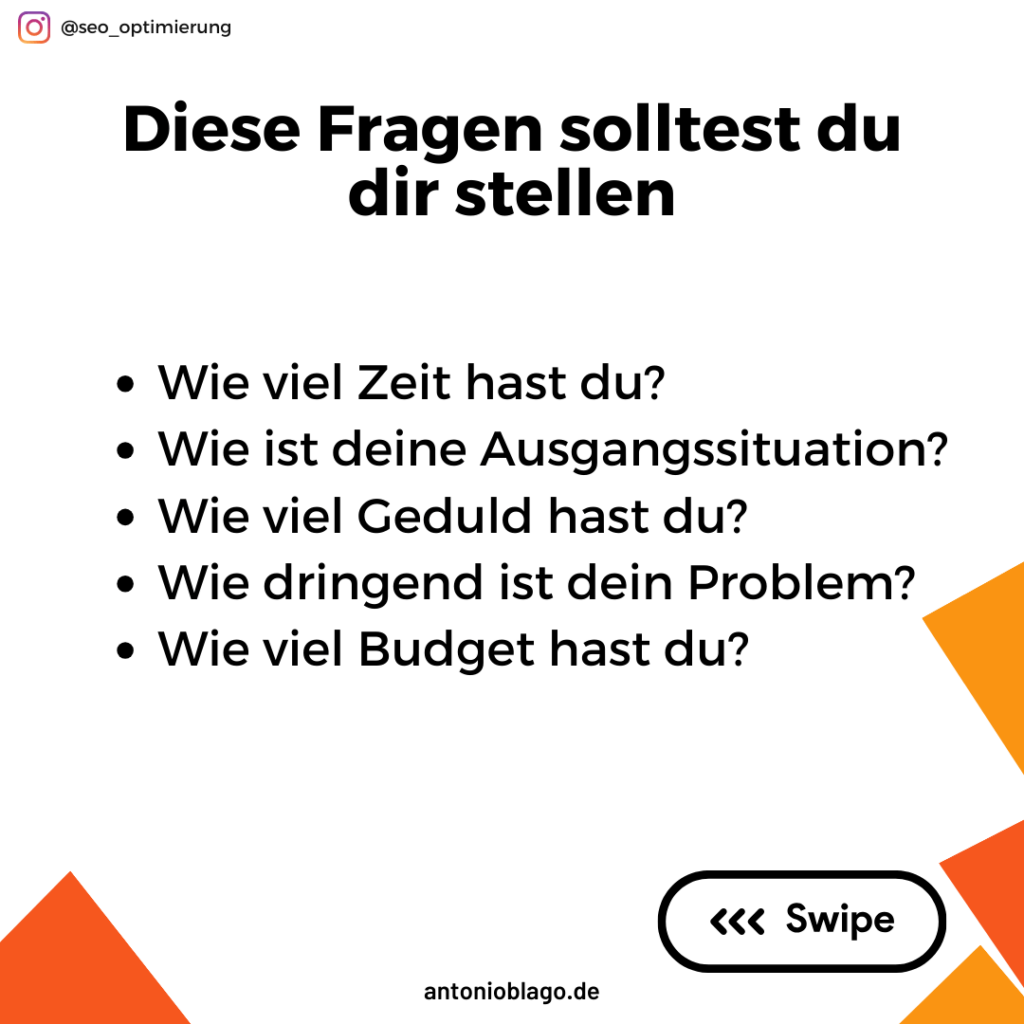
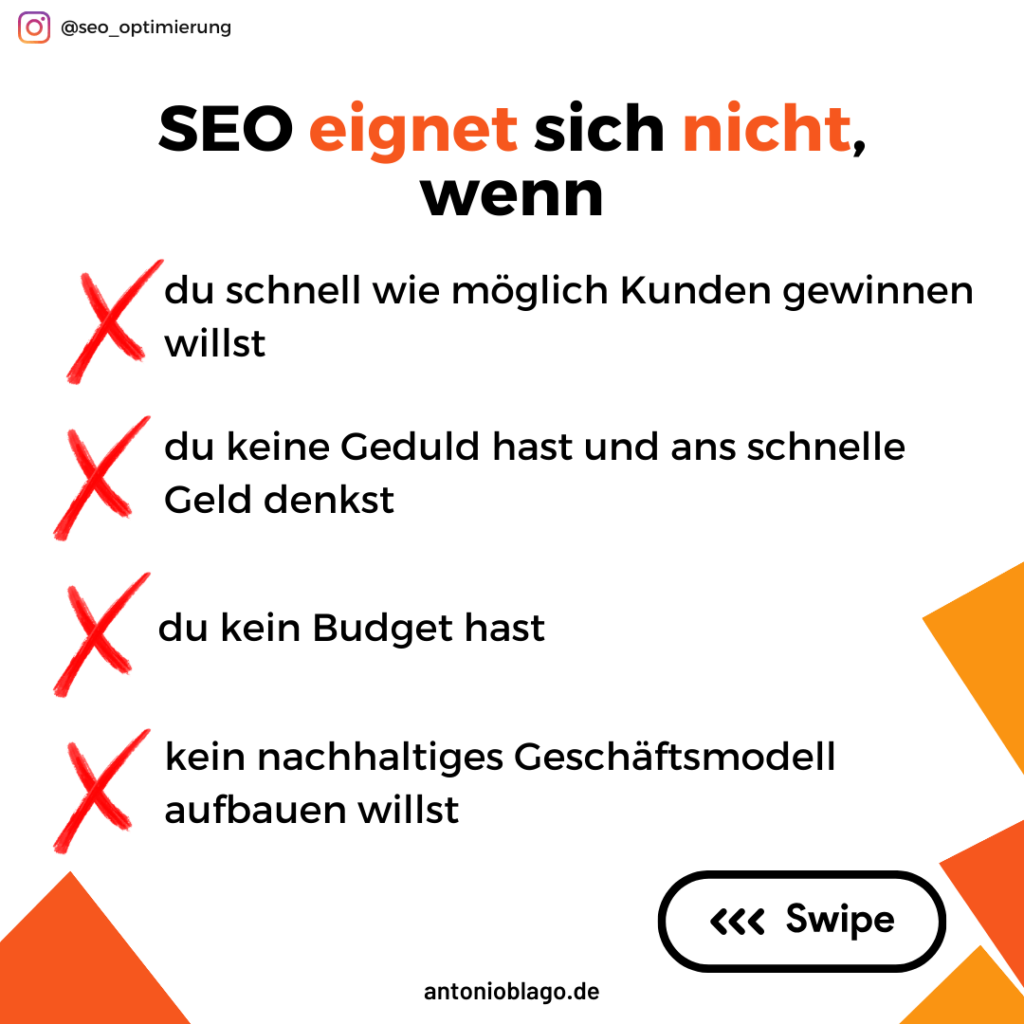
Competition in your niche, the current state of your website, your content production speed, and your domain's authority (competitor analysis tells you where you stand). A brand-new domain simply needs longer than an established one.
Do it yourself or hire a professional?
You can learn SEO yourself, and for small projects that is a great start. But the learning curve is steep and mistakes cost time, the most expensive resource in SEO. A professional brings proven processes, tools, and benchmarks from other projects. If you want an honest assessment first, book a free intro call.
Check for yourself how good your SEO is
Use the free Google ranking check to see where your domain stands for your most important keyword, and browse the free SEO tools for more quick checks.
Top Rankings with an SEO Roadmap
9 steps to successful SEO
Analysis, keyword research, competitor analysis, content strategy, on-page optimization, technical cleanup, off-page profile, local signals, and continuous monitoring: that is the proven nine-step roadmap I use in client projects. Take a look at my references to see it in action.
The long-term effect of SEO investments
Unlike ads, SEO results compound. Content that ranks keeps delivering traffic month after month without additional media budget. That is why the ROI of SEO usually beats paid channels from year one onwards.
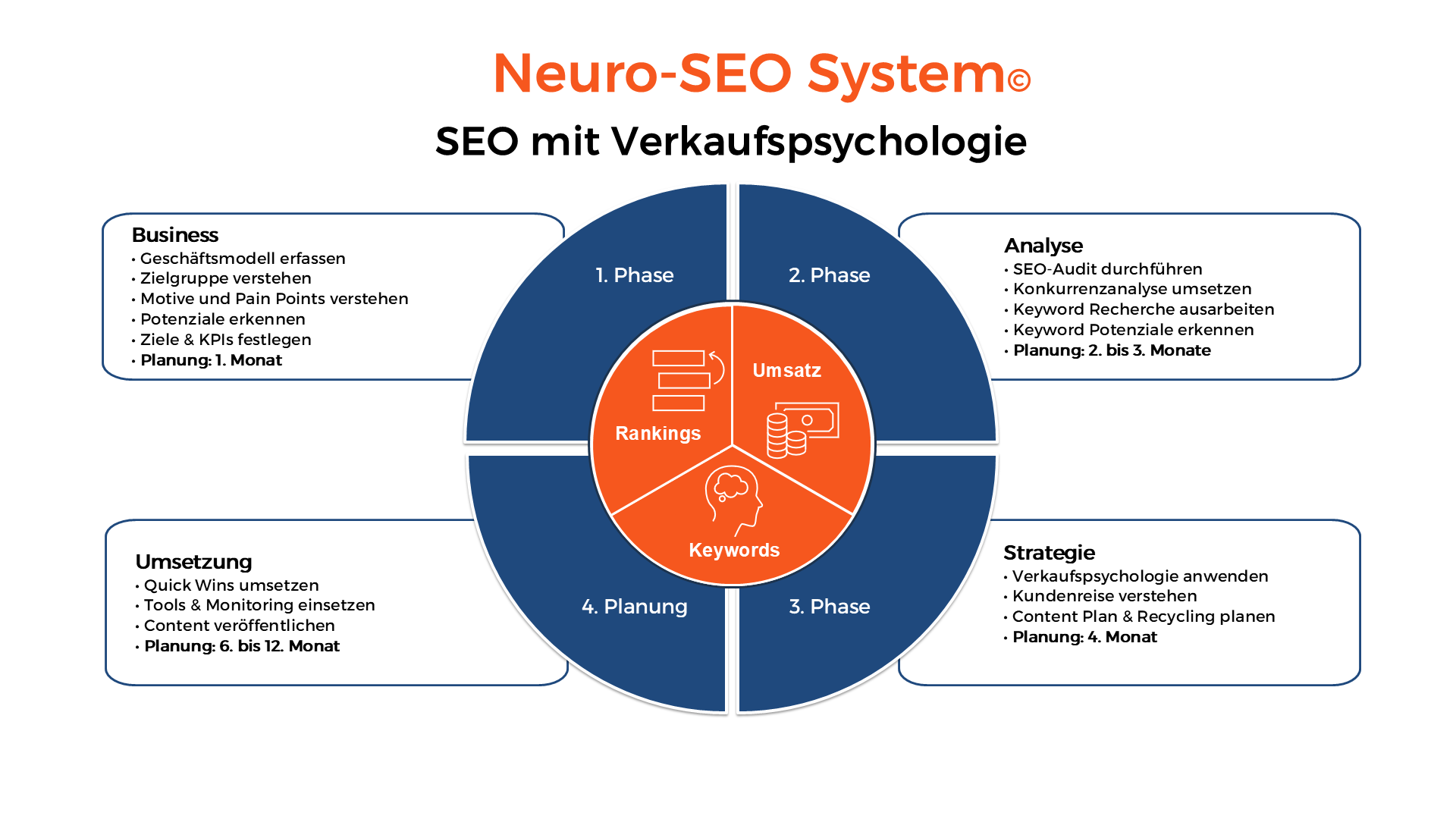
My Neuro-SEO System
SEO combined with buying psychology
My Neuro-SEO System combines data-driven SEO with principles from buying psychology. The goal is content that does not just rank but also clicks, convinces, and converts. You can see the packages on the pricing page.
FAQ
What is SEO?
SEO (search engine optimization) is the process of improving your website so it ranks higher in organic search results and attracts more relevant visitors.
Why is SEO important?
Because buying decisions start with a search. If your website does not appear on page one, your competitors get the click, the inquiry, and the revenue.
Is SEO a marketing channel?
Not in the classic sense. SEO is part of your marketing strategy; being found organically on Google, in AI search and in other search systems is the by-product. Customers do not think in channels, they move across several touchpoints with a problem or a need. SEO makes sure you are found along that customer journey exactly when the customer needs you. See the section SEO Is Not an Isolated Marketing Channel.
What is GEO (Generative Engine Optimization)?
GEO is the optimization of content for AI-powered answer engines such as ChatGPT, Perplexity, or Google's AI Overviews. Instead of ranking blue links, the goal is to be cited as a source in generated answers.
How does GEO differ from SEO?
SEO optimizes for ranked result lists, GEO for being quoted inside AI answers. The foundations overlap strongly: structured, trustworthy, clearly attributable content wins in both worlds.
Do I need GEO in addition to SEO?
Yes, increasingly so. AI assistants answer more and more commercial questions directly. Brands that are visible in those answers win the customer before a classic search result is ever clicked. A good SEO foundation is the prerequisite; GEO builds on top of it.
Is GEO measurable?
Yes. You can track how often LLMs mention your brand and which sources they cite. My study on how LLMs rank brands shows the methodology.
How long does it take until SEO results are visible?
Usually three to six months for the first measurable effects, depending on competition, starting point, and content speed.
What is local SEO?
Optimization for location-based searches ("near me", city names) including your Google Business Profile. See the case study on local search engine optimization.
I am building a new website first, so I do not need SEO.
The opposite is true. SEO belongs in the planning phase, like the wiring in a new house. Structure, URLs, and content architecture decided today determine your rankings tomorrow, and retrofitting is far more expensive.
I need to migrate my website, so I do not need SEO.
A migration without SEO support is one of the most reliable ways to lose rankings. Redirects, internal links, and content decisions need a plan, often across thousands of URLs.
What is the Google Search Console?
A free Google tool that shows how your site performs in search: indexing status, crawl errors, queries, clicks, and more.
What is a snippet?
The short preview of a page in the search results: title, URL, and description. A strong snippet increases your click-through rate.
What are backlinks?
Links from other websites to yours. They remain an important ranking factor; quality and relevance matter far more than quantity.
What is the Google ranking?
The position your website occupies in Google's search results for a given query. The higher the position, the more likely users find and visit your site. Check your Google ranking here.
Visibly AI: your SEO copilot
Projects, rankings, Search Console data and a copilot that runs the analysis for you. Start for free.

About the Author: Antonio Blago
SEO Freelancer & AI Visibility Expert
I optimize SEO data-driven with Python, behavioral psychology, and my Neuro-SEO System®. On YouTube, LinkedIn, and Instagram I share hands-on tutorials, insights, and SEO strategies.